Publications
Philosophical Intelligence Institute
The Philosophical Intelligence Institute publishes monographs, analytical volumes, workbooks, and structured research outputs developed through its ongoing programme of interpretive, governance, technological, and systems research.
These publications are not promotional texts.
They are formal research contributions designed to support disciplined inquiry into:
— meaning and interpretation
— admissibility and constraint
— legitimacy and perception
— governance and institutional dynamics
— technological capability, dependency, and governability
— structural transformation under conditions of complexity
Each work forms part of an integrated analytical architecture and is intended for serious analytical, institutional, and professional use.
Catalogue of Publications
The Institute’s publications translate its philosophical research into accessible intellectual resources, analytical frameworks and practical instruments for individual, professional and institutional use.
Together, these works form a developing body of Philosophical Intelligence, enabling readers to examine complex questions, challenge established assumptions, develop analytical capabilities and apply new ways of thinking to real-world problems.
Research Programmes
The Institute’s publications are developed within a set of structured research programmes, each addressing a core domain of Philosophical Intelligence.
These programmes organise the Institute’s work into coherent areas of inquiry, ensuring that individual publications contribute to a cumulative analytical architecture rather than operating as standalone outputs.
Distinction:
A concept is not necessarily a model. A model is not necessarily a framework. A framework is not necessarily an analytical engine. And an analytical engine is not automatically an operationally validated instrument.
A concept is not necessarily a model. A model is not necessarily a framework. A framework is not necessarily an analytical engine. And an analytical engine is not automatically an operationally validated instrument.
Research Programmes
The Institute’s publications are developed within a set of structured research programmes, each addressing a core domain of Philosophical Intelligence.
These programmes organise the Institute’s work into coherent areas of inquiry, ensuring that individual publications contribute to a cumulative analytical architecture rather than operating as standalone outputs.
9. Technological Regimes, Capability, and Governability
Focus:
The formation, capability, dependency, transformation, governance, and outcomes of technological systems as they become embedded in institutions, infrastructure, standards, knowledge, organisational routines, and public life.
The programme further investigates the consequences of artificial intelligence and advanced computational systems for institutional interpretation, identity, expertise, authority and decision-making.
Particular attention is given to technologically mediated representations, automated classification, artificial reflexivity and the conditions under which machine-generated outputs acquire institutional standing.
Technological systems do not merely provide new instruments for carrying out established activities. Their introduction may alter the relationships through which human agents, institutions and artificial systems interpret information, exercise capabilities and distribute responsibility.
The programme therefore examines how technological mediation changes the conditions under which knowledge becomes authoritative, institutional action becomes possible and consequential decisions remain governable.
Core analytical architecture:
- Technological Regime Formation
- Technological Capability
- Technological Regime Dynamics
- Technological Governability
- Technological Regime Outcomes
- Power–Knowledge–Capability–Burden Analysis
- Time and Scale Analysis
- Practical Exit and Reversibility
- Governable Dependency
- Institutional Learning
- AI-Mediated Institutional Decision-Making
- Artificial Reflexivity
- Human–Machine Interpretive Mediation
- Technologically Mediated Identity
- Automated Classification and Institutional Standing
- AI Attribution and Decision Authority
- Human Agency and Technological Dependency
- AI Corrigibility and Consequential Governance
Key analytical distinctions:
- Technological capability ≠ technological governability
- Adoption ≠ regime formation
- Dependency ≠ ungovernability
- Formal authority ≠ practical control
- Formal exit right ≠ deployable exit capability
- Monitoring ≠ correction
- Reform ≠ institutional learning
- Persistence ≠ inefficient lock-in
- Technological displacement ≠ the only possible outcome
- Machine-generated representation ≠ represented object
- Automated classification ≠ legitimate institutional judgement
- Artificial reflexivity ≠ established human self-consciousness
- Computational capability ≠ institutional decision authority
- Technical reliability ≠ admissibility of consequential use
- AI-assisted decision-making ≠ transfer of institutional responsibility
Position within the PII Architecture:
Technological Regime Research extends PII’s governance and capability work into technological systems whose operation becomes inseparable from institutional structure.
It examines how:
- technologies become durable institutional environments
- capability and dependency can develop together
- technological systems alter the constraints surrounding institutional action
- expertise and authority become distributed across organisations
- alternatives, fallbacks, and exit capabilities strengthen or decay
- technological transitions unfold differently across time and scale
- institutions retain—or lose—the capacity to monitor, intervene, recover, reverse, and learn
- technological outcomes emerge through interactions between technical systems and institutional conditions
The programme is comparative rather than technology-specific. Its cases span telecommunications, infrastructure, digital payments, cloud computing, aviation, nuclear regulation, building safety, public administration, and technological displacement.
Associated works:
- Governing Technological Regimes
- AIAM–AIGAD
- The Politics of AI Safety
- From Absolute Knowledge to Artificial Reflexivity — Applied Case Study 005
- The Architecture of Identity
- Governance of Attributed Standing — Applied Case Study 006
10. Literary Intelligence, Narrative Systems, and Corrigibility
Focus:
The disciplined use of literary and narrative worlds as bounded analytical objects for generating distinctions, questions, and externally testable hypotheses concerning interpretation, agency, representation, institutional narrative, corrigibility, and decision-making.
The programme also investigates literary works as structured environments through which questions of identity, agency, consciousness, cultural development, intellectual possibility and institutional transformation can be examined.
Literary worlds may reveal alternative configurations of meaning and experience that are not immediately available through conventional institutional descriptions.
However, literary interpretation does not independently establish empirical facts about the external world.
The programme therefore preserves a distinction between the interpretation of fictional or literary worlds, the analytical propositions generated through that interpretation and the subsequent evidence required to support claims beyond the literary object.
Recent research has extended Literary Intelligence into questions concerning cultural self-understanding, philosophical possibility, artificial intelligence, psychological identity and the distinction between genuine structural limitations and limitations produced by inherited conceptual frameworks.
Key frameworks:
- Literary Intelligence
- Third Object
- Reader-as-Integrator
- Levels of Interpretation
- Levels of Interpretive Capability
- Interpretive Plasticity
- Interpretive Sovereignty
- Distributed Knowledge
- Effective Agency
- Representational Governance
- Corrigibility — C1 / C2 / C3
- Correction Window
- Collective Intelligence
- Narrative Governance
- Human–Machine Literary Intelligence
- Decision Intelligence
- Literary Worlds as Analytical Objects
- Narrative Identity and Self-Understanding
- Cultural Interpretation and Intellectual Possibility
- Philosophical Possibility Analysis
- Genuine and Apparent Limits of Intellectual Possibility
- Literary–Philosophical Comparative Analysis
- Narrative Mediation of Identity
- Literary Interpretation and External Warrant
Position within the PII Architecture:
Literary Intelligence provides a controlled route from narrative observation to analytical distinction, external hypothesis, evidence, and correction while preserving the boundary between literary insight and empirical claim.
Associated works:
- Literary Intelligence: How Stories Become Instruments of Thought — Research and Reference Edition
- Literary Intelligence: How Stories Become Instruments of Thought — Reader Edition
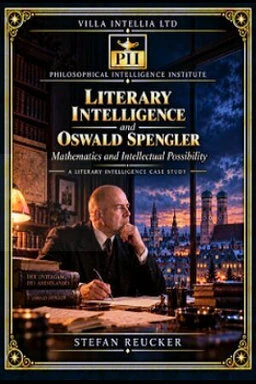
- Literary Intelligence — Oswald Spengler: Mathematics and Intellectual Possibility
- Literary Intelligence — Jean Baudrillard
- Literary Intelligence — David Deutsch
- Literary Intelligence — Günter Grass
- Literary Intelligence — Thomas Mann
- Literary Intelligence — Deleuze and Guattari
- Literary Intelligence — Gore Vidal
- Literary Intelligence — Bret Easton Ellis
- Literary Intelligence — Anne Carlisle
- Literary Intelligence — Haruki Murakami
11. Identity, Recognition, and Institutional Admissibility
Focus:
The constitution, persistence, development, transformation and institutional governance of identity across biological, personal, psychological, social, collective, political, cultural, technological and artificial domains.
The programme investigates identity as a multidimensional phenomenon that cannot be adequately explained through any single legal, biological, psychological, technological or institutional classification.
Particular attention is given to how identities become represented, recognised, classified and attributed institutional standing, and how identity-related claims may legitimately support consequential decisions.
Key frameworks:
- Architecture of Identity — Three-Axis Research Architecture
- Identity Scale
- Governance Sequence
- Developmental and Recursive Identity
- Identity Admissibility Engine (IAE)
- IAE — 18 Canonical Gates
- Identity Ontology and Persistence
- Constitutive Dependency Analysis
- Cross-Order Identity Analysis
- Identity Continuity and Transformation
- Identity Recognition and Classification
- Representative Legitimacy Assessment
- Identity Standing and Warrant
- Identity Crisis and Structural Disruption
- Psychological and Experiential Identity
- Collective and Civilisational Identity
- Technologically Mediated Identity
- Artificial and Machine-Associated Identity
- Identity Corrigibility and Consequential Governance
Position within the PII Architecture:
Identity Research introduces a distinct analytical dimension concerning what an identity is, how it persists, how it changes and under what conditions institutions may legitimately act upon claims concerning it.
Identity Research introduces a distinct analytical dimension concerning what an identity is, how it persists, how it changes and under what conditions institutions may legitimately act upon claims concerning it.
The programme distinguishes the identity-bearing subject from its representations, records, classifications and institutional recognition.
It also examines the relationships between personal experience, psychological development, collective belonging, cultural meaning and technological mediation.
The Identity Admissibility Engine provides a structured governance architecture for examining the transition from identity-related information to institutional consequence.
Its 18 canonical gates are organised across three governance planes:
- Identity Ontology and Persistence
- Representation, Classification and Standing
- Admissibility, Judgement and Consequence
The programme connects PII's research into meaning, interpretation, political order, governance, artificial intelligence and institutional authority.
Its governing distinction is that recognising or classifying an identity does not automatically establish sufficient understanding, legitimate standing or authority to act upon it.
Associated works:
- The Architecture of Identity — Reader Edition, 2026
- Identity Admissibility Engine — Analytical Architecture
- From Absolute Knowledge to Artificial Reflexivity — Applied Case Study 005
Research status:
The programme possesses a published foundational monograph and a formally specified analytical engine. Broader institutional applications and operational validation remain subjects for further development.
12. Expertise, Attributed Standing, and Institutional Authority
Focus:
The conditions under which expertise, evidence, interpretation and professional knowledge acquire standing within institutional processes, and the limits governing their conversion into judgement, decision authority and consequential action.
The programme investigates how institutions recognise expertise, attribute credibility, allocate decision-making influence and govern competing claims to knowledge and authority.
Particular attention is given to the distinction between possessing expertise, being recognised as an expert, receiving institutional standing and possessing legitimate authority to determine consequential outcomes.
Key research frameworks:
- Governing Expertise Research Programme
- EAL — Expert Admissibility Layer
- Expertise–Authority Distinction
- Attributed Standing
- Institutional Recognition and Warrant
- Expert Representation and Classification
- Jurisdiction and Domain Competence
- Evidential Sufficiency and Admissibility
- Cross-Domain Expertise Governance
- Expert Authority and Decision Responsibility
- Adversarial Examination of Expertise
- Interoperability Without Semantic Collapse
- Expertise Corrigibility and Institutional Review
Research assurance components:
- Expert Evidence Programme (EEP)
- Adversarial Proposition Examination
- Bounded Operational Validation
- Research Control and Proposition Tracking
- Expert Admissibility Integration
- Conditional Institutional Application
Position within the PII Architecture:
Governing Expertise provides a cross-domain research architecture for investigating how specialised knowledge becomes institutionally consequential.
Scientific, legal, technical, financial, psychological, administrative and other forms of expertise possess different objects, methods, standards and jurisdictions.
The programme investigates the conditions under which these forms of knowledge may properly inform institutional decisions without their differences being erased or their authority extended beyond legitimate boundaries.
Its governing principle is interoperability without semantic collapse.
Expertise may contribute evidence or interpretation to an institutional decision without independently establishing the authority to make that decision.
Recognition of an expert does not automatically establish the admissibility of every expert claim.
Equally, disagreement between experts does not necessarily establish that their respective findings are mutually incompatible. They may concern different analytical objects, employ different standards or operate within different jurisdictions.
The programme connects epistemology, institutional governance, classification, identity, legal and professional standing, and responsible decision-making.
Associated works and research:
- Governance of Attributed Standing — Applied Case Study 006
- Expert Evidence Programme — PII-EEP Research Series
- Expert Admissibility Layer — EAL Integration Research
- Governing Adversarial Systems
- Ontology Under Adversarial Representation
Research status:
The programme includes structured internal research, adversarial testing, bounded validation activities and developing integration architectures.
These research activities do not constitute general independent certification of institutional applications.
The programme's purpose is to establish explicit conditions governing when expertise may legitimately influence institutional reasoning and action.
1. Meaning, Interpretation, and Epistemic Systems
Focus:
The formation and stabilisation of meaning, the limits of interpretation, and the maintenance of epistemic integrity under conditions of signal complexity, symbolic intensity, and uncertainty.
The formation and stabilisation of meaning, the limits of interpretation, and the maintenance of epistemic integrity under conditions of signal complexity, symbolic intensity, and uncertainty.
The programme also examines the relationship between meaning, identity formation, psychological experience and self-understanding, including the ways technological mediation alters how individuals and collectives encounter, interpret and represent themselves.
Particular attention is given to the distinction between an individual's lived experience, its interpretation, its external representation and the authority subsequently attributed to that representation.
The programme investigates how disruptions to meaning, continuity and recognition may contribute to identity instability, interpretive crisis and the reconstruction of self-understanding.
Key frameworks:
- Identity Meaning and Self-Understanding
- Psychological and Experiential Identity
- Identity Continuity and Meaning Reconstruction
- Technologically Mediated Interpretation
- Artificial Reflexivity and Self-Representation
- MoMean — Model of Meaning
- MM — Model of Mysticism
- PIE — Philosophical Interpretive Engine
- SLIP — Structural Limit of Interpretation Principle
- Epistemic Stability Principle
- Interpretation-Before-Judgment Principle
- NSP — Narrative Stabilisation Protocol
- Protected Interpretive Space
- Literary Intelligence
- Meaning-Collapse Analysis
- PSG — Post-Semiotic Governance
- PSP — Post-Semiotic Protocol
Associated works:
- The Architecture of Identity
- From Absolute Knowledge to Artificial Reflexivity — Applied Case Study 005
- The Model of Meaning
- The Model of Mysticism
- Applied Model of Mysticism
- Applied MM Field Guide and Workbook
- Post-Semiotic Governance
- Sequencing Meaning and Power
- Narrative Stabilisation Protocol
2. Political Cognition and Admissible Governance
Focus:
The processes through which signals become politically significant, interpretations are ranked, support is formed, legitimacy is allocated, and institutional action becomes authorised.
The processes through which signals become politically significant, interpretations are ranked, support is formed, legitimacy is allocated, and institutional action becomes authorised.
Key frameworks:
- Political Cognition Architecture
- Political Activation Model
- Political Significance Allocation
- Ranking Distortion Model
- Support Morphology
- Interpreted Stability Model
- Crisis Constitution Model
- Premature Political Closure
- Provisional Governance Framework
- Admissibility Equation — Structural Admissibility Model
- Admissibility Verification Model
Associated works:
- Political Cognition and Admissible Governance
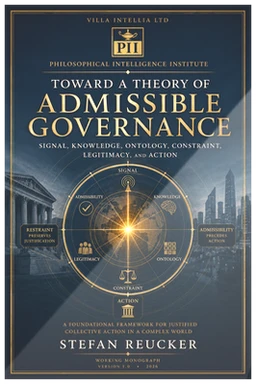
- Towards a Theory of Admissible Governance
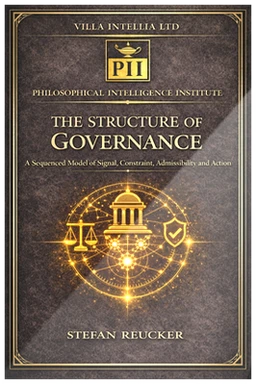
- The Structure of Governance
- The Politics of AI Safety
3. Governance Theory, Dynamics, and System Architecture
Focus:
Governance and power as dynamic, layered and constraint-bound systems, including perception, authority, resources, dependency, alternatives, operational capacity, stabilisation, correction, feedback, legitimacy, sequencing, lock-in, containment and transformation under real-world conditions.
The programme further investigates governance under adversarial conditions, including situations in which evidence, representations, institutional classifications and competing claims to authority become objects of strategic manipulation or contestation.
This research examines how institutions govern attributed standing, expertise, decision authority and consequential action when the reliability, relevance or legitimacy of competing claims cannot be assumed.
It also investigates the conditions required to preserve institutional correction and accountable judgement under adversarial pressure.
Key frameworks:
- LAP — Layered Architecture of Power
- Power–Correction Asymmetry
- Corrective Power Architecture
- Governed Power
- Governed Power Reversal
- DG-GTM — Doctrine-Governed Governance Transformation Model
- Doctrine Stack I–XIII — Integrated Governance Logic System
- Dynamic Basin Model — Reality Shift and Basin Shift Model
- Quadruple Feedback Governance System
- Lock-in Function (Λ) — Structural–Perceptual Coupling Threshold
- Correction Shock Model (Σ) — Nonlinear System Release Dynamics
- Reucker–Virilio Equation
- GOA — Governance of Organizational Architecture
- GOS — Governance Operating System
- CGF — Containment Governance Framework
- Reconfiguration Principle — Governance Doctrine VI
- Market Discovery Sequencing Principle — Governance Doctrine XII
- PSO — Philosophical Surgical Operation
- GAS — Governing Adversarial Systems
- Governance of Attributed Standing
- Adversarial Governance Architecture
- Expertise–Authority Distinction
- Institutional Standing and Warrant
- Adversarial Representation Governance
- Decision Authority and Consequential Responsibility
Associated works:
- The Structure of Governance
- The Architecture of Power — Reader’s Edition
- Governance of Organizational Architecture
- Containment Governance
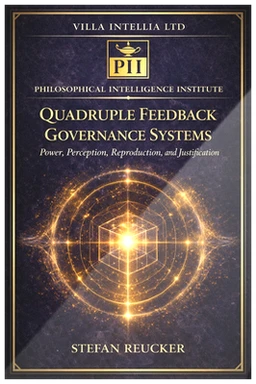
- Quadruple Feedback Governance Systems
- Towards a Theory of Admissible Governance
- The Politics of AI Safety
- AIAM–AIGAD
- The Doctrine Stack
- The Correction Shock Principle
- Market Discovery Sequencing
- Governing Adversarial Systems
- Governance of Attributed Standing — Applied Case Study 006
- Ontology Under Adversarial Representation
4. Classification, Ontology, Verification, and System Structuring
Focus:
Formal methods for classifying complex problems, specifying governing properties, mapping system states, identifying failure conditions, and enabling admissible intervention.
The programme extends classification and ontology research into adversarial representation: circumstances in which an object, event, institution, identity or problem is represented through competing, incomplete, strategically constructed or potentially misleading descriptions.
A central distinction concerns the relationship between the object being investigated and the representations through which it becomes available to institutional interpretation.
The programme examines whether a representation adequately preserves the relevant ontological properties of its object and whether subsequent classifications, judgements and actions remain justified when those representations are challenged.
This research is particularly relevant to institutional disputes, public narratives, expert evidence, artificial intelligence, automated classification and adversarial decision environments.
Key frameworks and tools:
- IOM — Issue Ontology Matrix
- Ontological Classification
- Classification Filter
- Operability Filter
- Admissibility Filter
- Admissibility-Property Specification
- Governance State-Space Mapping
- Transition Analysis
- Constraint Verification
- Failure-State Identification
- Continuous Feedback and Re-Verification
- Admissibility Verification Model
- Sequencing Meaning and Power
- OAR — Ontology Under Adversarial Representation
- Object–Representation Distinction
- Adversarial Representation Analysis
- Ontological Integrity Assessment
- Representation-to-Classification Verification
- Classification Warrant and Standing
- Cross-Domain Ontological Transfer
- Adversarial Classification Testing
- Identity Representation and Admissibility
Associated works:
- The Issue Ontology Matrix
- The Admissibility Verification Model
- Ontology Under Adversarial Representation
- Sequencing Meaning and Power
- PIE: Seven Tools for Philosophical Intelligence
- Systems and Governance Verification
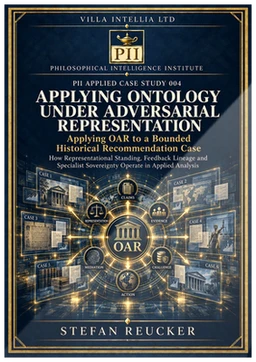
- Applying Ontology Under Adversarial Representation — Applied Case Study 004
- The Architecture of Identity
- Governance of Attributed Standing — Applied Case Study 006
5. Governance, Institutions, and System Stress
Focus:
Institutional behaviour under structural strain, symbolic pressure, legitimacy loss, interpretive instability, and accumulated contradiction.
Key frameworks:
- ISM — Institutional Strain Model
- ORM — Order Reconfiguration Model
- LSM — Legitimacy Signal Model
- SSBM — Symbolic–Substantive Balance Model
- CGF — Containment Governance Framework
- PSP — Post-Semiotic Protocol
- Dynamic Containment and Release Analysis
- Interpreted Stability Model
- Correction Shock Model (Σ)
Associated works:
- Institutional Strain
- Order Reconfiguration
- Legitimacy Signal Model
- Containment Governance
- Post-Semiotic Governance
- The Architecture of Power — Reader’s Edition
- The Correction Shock Principle
6. Political Order and System Formation
Focus:
The formation, persistence, legitimisation, and transformation of political order as historically embedded systems.
The programme also investigates the formation and transformation of collective and political identity, including the relationships between historical experience, collective memory, territorial belonging, institutional recognition and claims to political representation.
Political orders do not merely establish legal and administrative arrangements. They also influence how communities understand their continuity, legitimacy, historical inheritance and collective existence.
The programme examines how changes in political authority, territorial arrangements and institutional recognition may affect collective identity, and how competing claims to represent a political community acquire or lose legitimacy.
This work connects political order formation with PII's wider research into identity, recognition, representative standing and consequential governance.
Key frameworks:
- POM — Political Order Model
- TTL — Trauma–Territory–Law
- TSM — Trauma Stabilisation Model
- ISM — Institutional Strain Model
- ORM — Order Reconfiguration Model
- LSM — Legitimacy Signal Model
- Crisis Constitution Model
- Interpreted Stability Model
- Collective Identity and Political Formation
- Political Identity Continuity
- Territorial Identity and Historical Memory
- Representative Legitimacy
- Political Recognition and Institutional Standing
- Collective Identity Transformation
Integrated structural sequence:
- TTL → ISM → ORM → TSM
Position within the PII Architecture:
The Political Order Model operates as a bridge layer between governance dynamics and deep structural formation.
It explains how:
- governance systems become historically embedded
- institutional structures acquire durability and path dependence
- collective trauma becomes encoded in territory, law, and identity
- legitimacy stabilises or destabilises political arrangements
- institutional strain produces pressure for order reconfiguration
- reconfigured orders either stabilise trauma or reproduce it
Associated works:
- Political Order Model
- Trauma–Territory–Law
- Trauma Stabilisation Model
- Institutional Strain Model
- Order Reconfiguration Model
- The Architecture of Identity
- Governance of Attributed Standing — Applied Case Study 006
7. Process Governance and Institutional Becoming
Focus:
Institutions and governance systems as processes of becoming rather than fixed structures, with particular attention to inheritance, representation, selection, determination, transition, consequence, correction, reproduction, continuity, burden, stress, rupture and institutional transformation.
The programme draws substantially on Alfred North Whitehead’s process philosophy as philosophical provenance, particularly concepts of becoming, relation, inheritance, prehension, concrescence, transition, society and creativity. PII interprets and extends these concepts into an institutional governance architecture rather than treating institutions as literal Whiteheadian entities.
Geological concepts including stratigraphy, morphology, stress, strain, fault, threshold, rupture and recovery are used as controlled analytical correspondences for examining institutional history, accumulated pressure, structural weakness and transformation.
Key frameworks:
- Process Governance Architecture
- Process Governance Protocol
- Process Governance Working Grammar — Inheritance → Selection → Integration → Determination → Transition → Reproduction
- Governance Occasion
- Selective Inheritance
- Consequential Transition
- Transition Governance / Renewed Governance
- Process Responsibility
- Process Admissibility
- Reproductive Quality
- Whiteheadian Governance Framework
- Geological–Governance Comparative Architecture
- Institutional Stratigraphy and Morphology
- Stress, Strain, Fault and Threshold Analysis
- Dynamic Basin Model
- Lock-in Function (Λ)
- Correction Shock Model (Σ)
- Dynamic Containment and Release Analysis
Position within the PII Architecture:
Process Governance provides PII with a temporal and processual architecture for examining how institutional conditions are inherited, interpreted, selected, integrated, determined, transferred through consequential transitions, corrected and reproduced.
It connects philosophical interpretation with governance analysis by asking not only what an institution is or what decision it makes, but how present institutional action becomes part of the field inherited by later actors.
The programme therefore links questions of representation, authority, responsibility, capability, burden, legitimacy, admissibility, correction and institutional continuity across time.
Associated works:
- Process Governance: An Architecture of Institutional Becoming — Reader Edition
- Process Governance: A Whiteheadian Architecture of Becoming — Research and Reference Edition
- Process Governance — Technical Reference and Instruments — companion technical volume
- Geological Principles and Governance
- Dynamic Basin Governance
- The Correction Shock Principle
8. Applied Philosophical Intelligence and Diagnostic Practice
Focus:
The translation of PII theory into structured diagnostic, reflective, organisational, and governance tools.
Key frameworks and tools:
- PIE — Philosophical Interpretive Engine
- MX–PII Analytical Engine
- IAE — Identity Admissibility Engine
- FCAE — Finance Capability Admissibility Engine
- IOM — Issue Ontology Matrix
- Applied MM Diagnostic Framework
- Applied MM Pattern Library
- Applied MM Reflective Instrument
- Applied MM Field Guide
- PIE Self-Diagnostic Instrument
- PIE — Analytical Practice and Practitioner Instruments
- Admissibility Verification Model
- PSO — Philosophical Surgical Operation
- Provisional Governance Framework
- Institutional Diagnostic and Decision-Framing Methods
The programme integrates foundational interpretation, multidimensional analysis, ontology classification and specialised admissibility assessment into a developing system of applied Philosophical Intelligence.
Its analytical engines address different but related problems.
PIE establishes foundational interpretive and admissibility conditions. MX–PII supports integrated examination of multidimensional problems. IAE investigates identity-related claims and their transition into institutional decisions. FCAE examines the relationship between financial resources, organisational arrangements and governable capability.
These instruments are complemented by diagnostic workbooks, reflective methods, applied case studies and practitioner-oriented publications.
Their development supports the controlled translation of philosophical research into structured analytical practice, while preserving distinctions between conceptual development, case-supported demonstration and independently validated operational application.
Applied MM diagnostic patterns:
- Interpretive Overload
- Symbolic Rigidity
- Identity Contraction
- Affective Flooding
- Cognitive Looping
- Somatic Alarm
- Epistemic Inflation
- Integration Delay
Associated works:
- Applied Model of Mysticism
- Applied MM Field Guide and Workbook
- PIE: Seven Tools for Philosophical Intelligence
- The Issue Ontology Matrix
- From Abstract Philosophy to Strategic Practice
- The Finance Capability Admissibility Engine
- The Architecture of Identity
- PIE Self-Diagnostic Workbook
- PIE Workbook — Analytical Practice
- PIE Practitioner Handbook
- MX–PII Analytical Engine — Research Article
- Applying the Issue Ontology Matrix — Applied Case Study 003
- Applying Ontology Under Adversarial Representation — Applied Case Study 004
Integration Principle
Each publication contributes to one or more research programmes.
The programmes are not isolated fields. They form interconnected layers within a common analytical system:
Meaning and Interpretation
↓
Political Cognition and Classification
↓
Admissibility and Verification
↓
Governance and Power Architecture and Institutional Action
↓
System Stress and Order Reconfiguration
↓
Political Formation and Long-Term Stabilisation
↓
Political Cognition and Classification
↓
Admissibility and Verification
↓
Governance and Power Architecture and Institutional Action
↓
System Stress and Order Reconfiguration
↓
Political Formation and Long-Term Stabilisation
Cross-Cutting Technological Regime Layer
Technological Regime Formation
↕
Capability and Dependency
↕
Institutional Governability
↕
Regime Dynamics and Outcomes
↕
Capability and Dependency
↕
Institutional Governability
↕
Regime Dynamics and Outcomes
Technological Regime Research operates across the wider PII architecture rather than as a final stage within it.
It connects questions of meaning, classification, admissibility, governance, institutional capability, system stress, and long-term transformation to the technological environments through which contemporary institutions increasingly act.
Process Governance operates across these layers as a temporal architecture of institutional becoming, tracing how inherited conditions become representation, determination, transition, consequence, correction and future institutional inheritance.
Taken together, the Institute’s publications form:
An integrated analytical architecture for interpreting, classifying, structuring, verifying, and governing complex systems—including the technological regimes through which institutional capability is increasingly created and constrained—under conditions of uncertainty, dependency, stress, and transformation.
Cross-Cutting Research Architectures
The Institute's research programmes are interconnected rather than independent disciplinary compartments.
Three cross-cutting architectures provide additional dimensions of analysis.
Identity and Recognition
Identity Research examines the constitution, development, representation, recognition and institutional governance of personal, collective and technologically mediated identities.
Expertise and Attributed Standing
Governing Expertise examines how specialised knowledge acquires institutional recognition, evidential standing, warrant and decision-making influence, while preserving the boundaries between professional domains.
Technological Regimes and Mediation
Technological Regime Research examines how technological systems establish capabilities, dependencies, institutional constraints and new conditions for knowledge, interpretation, identity and governance.
These architectures interact with the Institute's foundational research into meaning, interpretation, ontology, classification, admissibility, power and institutional transformation.
Process Governance supplies an additional temporal dimension, examining how institutional conditions are inherited, selected, transformed, corrected and reproduced through successive transitions.
Together, these relationships support a cumulative research architecture extending from philosophical interpretation to structured analytical methods, institutional diagnostics and potentially governable professional applications.
The purpose is not to collapse different forms of knowledge into a single explanatory model, but to establish their relationships while preserving their respective meanings, evidential limits and governing conditions.
Publications Section












Catalogue of Publications
PHILOSOPHICAL INTELLIGENCE
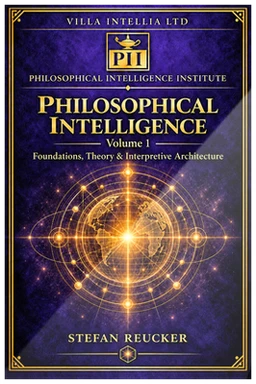
Philosophical Intelligence — Volume 1
Book | Foundations, Theory & Interpretive Architecture
The conceptual architecture of Philosophical Intelligence.
Establishes the foundations of Philosophical Intelligence as a systematic framework for interpreting meaning, legitimacy, power, authority, and institutional stability across complex systems.
NZD $24.50
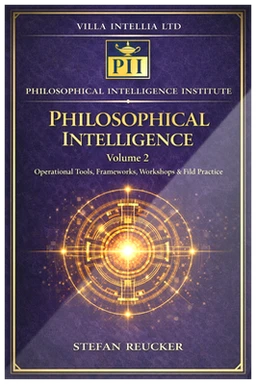
Philosophical Intelligence — Volume 2
Book | Methods, Governance & Analytical Practice
Govern the method.
Translates the foundations of Philosophical Intelligence into disciplined methods for classification, evidence, interpretation, admissibility, authority, action, and correction.
NZD $24.50
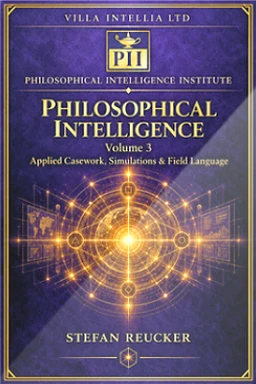
Philosophical Intelligence — Volume 3
Book | Cases, Simulations & Field Practice
Practise judgement under pressure.
Applies Philosophical Intelligence through cases, simulations, field exercises, and structured practice—testing judgement across evidence, authority, admissibility, specialist boundaries, consequence, and correction.
NZD $24.50
PHILOSOPHY & APPLIED PHILOSOPHY
After the Body without Organs
Research Monograph | Deleuze, Guattari & Applied Philosophy
Governability is not ontologically neutral.
Explains Deleuze and Guattari’s relational philosophy through the Body without Organs, assemblage, multiplicity, territory, deterritorialization, capture, striation and becoming, then applies those distinctions to contemporary institutions, AI, platforms, networks and governance. Includes an extensive Applied Philosophy appendix with reader questions, worksheets and case exercises for examining how relations, classification and formalization can change the objects being governed.
NZD $16.50
NZD $16.50
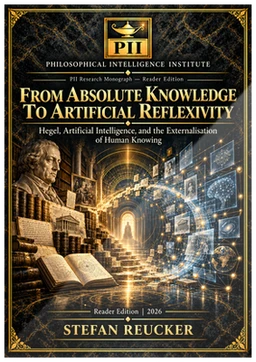
From Absolute Knowledge to Artificial Reflexivity
Research Monograph | Hegel, Artificial Intelligence & Civilisational Self-Relation
Artificial intelligence does not complete history. It changes the conditions through which civilisation encounters itself.
Examines AI through Hegelian questions of history, mediation, contradiction, freedom, and self-relation, and introduces Artificial Reflexivity as a PII concept for understanding how civilisation increasingly interrogates and reconstructs its own accumulated symbolic production through computational systems.
Examines AI through Hegelian questions of history, mediation, contradiction, freedom, and self-relation, and introduces Artificial Reflexivity as a PII concept for understanding how civilisation increasingly interrogates and reconstructs its own accumulated symbolic production through computational systems.
NZD $9.50
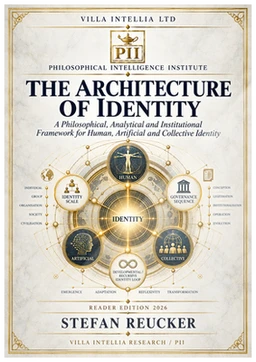
The Architecture of Identity
Research Monograph | Identity, Social Ontology & Institutional Governance
Identity is not a single question.
A comprehensive philosophical and analytical framework for understanding how personal, collective, institutional and technologically mediated identities are constituted, sustained, recognised, classified and transformed. Introduces the three-axis Architecture of Identity and the 18-gate Identity Admissibility Engine, examining how identity claims acquire institutional standing and what consequences they may legitimately support.
NZD $24.50
Process Governance
Research and Reference Edition | Whiteheadian Process Philosophy, Institutional Becoming & Governance
Institutions are processes of inheritance, determination, transition and reproduction.
The comprehensive 1,141-page edition of PII’s Process Governance architecture.
Drawing substantially on Alfred North Whitehead’s process philosophy, geological process analysis and PII’s wider governance architecture, the publication develops an extensive theory and practical reference system for understanding institutional inheritance, stability, accumulated stress, burden transfer, thresholds, rupture, correction, recovery and transformation.
Includes the full theoretical architecture, diagnostic models, analytical instruments, questionnaires, audits, matrices, protocols, worksheets, applications, glossary, bibliography and expanded analytical index.
1,141 pages | Digital PDF / Print-ready | September 2026
NZD $95.00
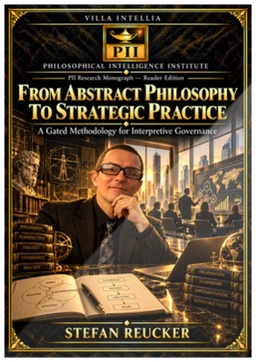
From Abstract Philosophy to Strategic Practice
Monograph | Methodology
A gated model of interpretive governance.
Bridges philosophical reasoning and consulting practice through threshold conditions for admissible intervention and structured refusal.
NZD $9.50
From Philosophy to Practice - Alan Watts Case Study
Monograph | Applied Philosophy & Philosophical Governance
Monograph | Applied Philosophy & Philosophical Governance
What happens when philosophy leaves the page?
Uses Alan Watts as a historically grounded case for examining how philosophical ideas move into psychotherapy, communication research, institutions and creative practice. Develops Philosophical Application Governance (PAG), a PII framework for tracing provenance, interpretation, standing, ontology, admissibility, translation, implementation, outcome and correction.
NZD $24.50
CORE ANALYTICAL TOOLS
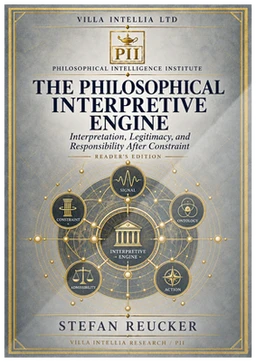
The Philosophical Interpretive Engine (PIE)
Monograph | Interpretive Systems
Interpretation can persist after governing force weakens.
Examines how meaning, legitimacy, responsibility, and critique can remain institutionally active even when their capacity to constrain outcomes becomes weak, inconsistent, or structurally secondary.
NZD $24.50
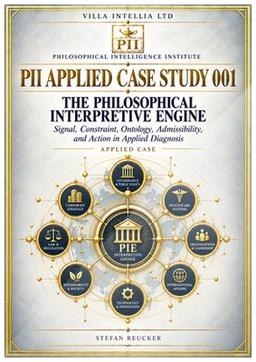
PII Applied Case Study 001 — Applying the Philosophical Interpretive Engine (PIE)
Applied Case Study | Decision Architecture
Applied Case Study | Decision Architecture
From Misclassification to Admissible Action.
A practical demonstration of the Philosophical Interpretive Engine in organisational analysis, showing how PIE separates signal from explanation, tests competing ontologies, identifies structural constraints and converts diagnosis into admissible action. The case shows how an apparent performance and accountability problem can be reclassified as a Capability–Routing Dependency with Incentive Reinforcement, changing both the diagnosis and the legitimate intervention field.
NZD $7.50
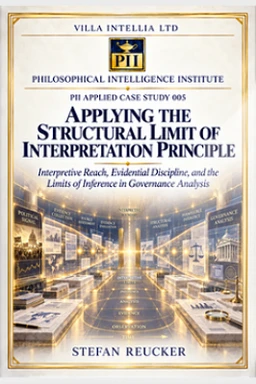
PII Applied Case Study 005 — Applying the Structural Limit of Interpretation Principle (SLIP)
Applied Case Study | Interpretive Reach & Evidential Discipline
When does a plausible interpretation become stronger than the evidence carrying it?
An applied case study testing the Structural Limit of Interpretation Principle (SLIP) against the development, representation, legislative formalisation and enactment of New Zealand’s Regulatory Standards Bill 2024–2025. The study tracks how interpretive warrant changes as a political signal becomes an institutional object, and develops practical controls for Responsibility Anchoring, Evidential Density, structural sufficiency, claim distance, durability and specialist dependency.
NZD $9.50
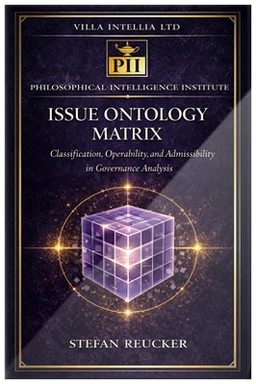
Issue Ontology Matrix (IOM)
Monograph | Classification Framework
Determine the problem before solving it.
A formal ontology for classifying complex issues and enabling structured, admissible analysis.
NZD $24.50
PII Applied Case Study 002 — Applying Pre-Analytical Classification (PAC)
Applied Case Study | Classification & Governance
Classification before interpretation.
A worked institutional case showing how PAC tests competing problem classifications, establishes the primary domain and analytical object, and determines which analytical tools are eligible or excluded. Includes practical PAC tools, client-facing outputs and guidance for progressing to IOM Phase 1 — Structural Analysis.
NZD $7.50
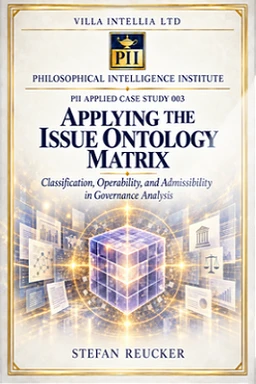
Applying the Issue Ontology Matrix (IOM)
Applied Case Study | From Classification to Structural Operability and Admissibility
Classification before engagement.
A practical application of the Issue Ontology Matrix to a constructed public-sector funding case where participation expands while formal decision authority remains differentiated. The study follows the full IOM sequence from Pre-Analytical Classification through structural analysis to Admissible, Conditionally Admissible and Refused forms of engagement.
NZD $9.50
GOVERNANCE SYSTEM ANALYSIS
The Structure of Governance
Book | Governance Architecture
Signal → Constraint → Admissibility → Action.
A formal model explaining why governance systems fail and how structurally valid intervention becomes possible.
NZD $34.50
The Architecture of Power
Reader’s Edition | Power, Governance & Institutional Analysis
Power begins before decision.
Develops the Layered Architecture of Power (LAP), an eleven-layer framework for understanding how perception, knowledge, authority, resources, dependency, alternatives, influence, operational capacity, stabilisation and correction shape institutional action—and whether consequential power remains governable.
Extends the analysis across organisations, markets, public authority, media, platforms, algorithms and AI, before developing practical approaches to Power–Correction Asymmetry, corrective architecture and admissible action.
NZD $21.50
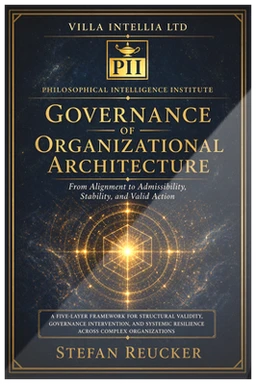
Governance of Organizational Architecture (GOA)
Monograph | Organizational Design
Structure determines decision capacity.
Reframes organisational architecture as a governing layer shaping signal flow, admissibility, and system outcomes.
NZD $21.50
The Finance Capability Admissibility Engine
Book | Organisational Capability & Analytical Architecture
Capital movement is not capability movement.
A controlled analytical architecture for determining how changes in resources, rights, and relationships are converted—or fail to be converted—into organisational capability, and whether that capability can continue.
NZD $49.50
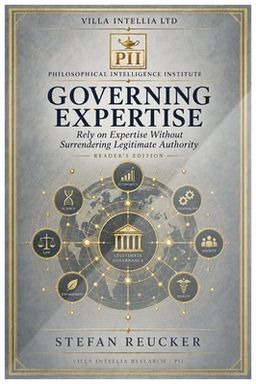
Governing Expertise
Book | Expertise Governance & Institutional Decision-Making
Expertise is indispensable. Abdication is not.
A practical governance architecture for determining when expertise may be relied upon, how expert claims and relationships should be bounded and challenged, and how legitimate decision authority can be retained across organisations, professional settings, and human–machine systems.
NZD $49.50
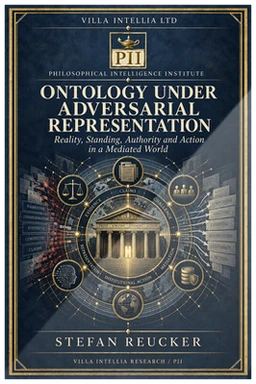
Ontology Under Adversarial Representation
Monograph | Representation, Ontology & Institutional Governance
Representation is not reality. Standing must be governed.
Examines how contested, compressed, synthetic, expert, legal, administrative and machine-mediated representations acquire institutional standing—and how authority, action and correction should be governed when reality is mediated.
NZD $19.50
Applying Ontology Under Adversarial Representation
Applied Case Study | Feedback, Evidential Standing, and Recursive Recommendation Systems
Observed interaction is real. Evidential independence is a separate question.
A practical application of Ontology Under Adversarial Representation (OAR) to a bounded historical YouTube recommendation case, examining how prior exposure conditions later evidence and what standing that returning evidence may legitimately receive.
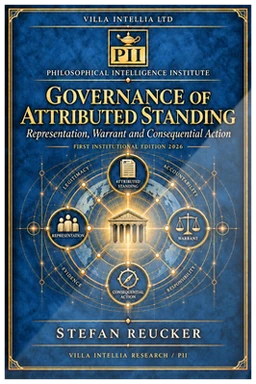
Governance of Attributed Standing
Monograph | Representation, Standing & Institutional Governance
Representation is not authority. Consequence must be warranted.
Examines how represented or attributed properties, statuses, classifications, expert findings and institutional records acquire consequential standing—and introduces the GAS architecture for governing both the warrant for an attribution and the bridge from that attribution to legitimate action.
NZD $18.50
Applying Governance of Attributed Standing
Applied Case Study | Fiscal Claims, Evidential Standing & Political Consequence
The number is not yet the standing.
A practical application of Governance of Attributed Standing (GAS) to contested fiscal claims in the 2026 New Zealand election, examining how numerical differences, professional review, political attributions and repeated public claims acquire standing—and what consequences that standing may legitimately support.
NZD $12.50
Towards a Theory of Admissible Governance
Monograph | Governance Architecture
Monograph | Governance Architecture
Power → Justification → Constraint → Admissible Action.
A concise PII explainer introducing the conditions under which institutional power becomes legitimate, constrained, proportionate, and fit for governance action.
A concise PII explainer introducing the conditions under which institutional power becomes legitimate, constrained, proportionate, and fit for governance action.
NZD $29.50
Post-Semiotic Governance
Monograph | Governance Limits
When interpretation no longer governs.
Analyses governance under conditions where meaning persists but loses its ability to constrain action.
NZD $24.50
Containment Governance
Monograph | Constraint Systems
Governance under pressure and limitation.
A diagnostic framework for analysing institutional behaviour under fiscal constraint and symbolic escalation.
NZD $18.50
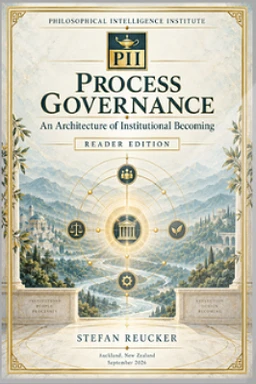
Process Governance
Reader Edition | Institutional Becoming & Governance Architecture
Governance is responsibility for what becomes next.
Drawing substantially on Alfred North Whitehead’s process philosophy, Process Governance develops a PII architecture for examining how institutions inherit conditions, represent reality, form determinations, govern consequential transitions, distribute burden, receive correction and reproduce the conditions inherited by future actors.
NZD $18.50
The Legitimacy Signal Model (LSM)
Monograph | Legitimacy Systems
Why legitimacy persists beyond its function.
A formal model of how authority and interpretive power continue even after losing their constraining force.
NZD $18.50
Quadruple Feedback Governance Systems
Monograph | Systems Dynamics
Four-layer feedback architecture of governance.
Explains how systems stabilise contradiction, drift, and reconfigure through coupled feedback loops.
NZD $18.50
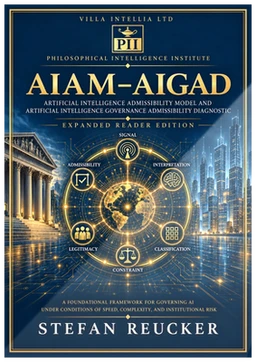
AIAM–AIGAD
Expanded Reader Edition | AI Governance & Computational Admissibility
Expanded Reader Edition | AI Governance & Computational Admissibility
AI output is not governance knowledge until it has passed admissibility.
Develops the Artificial Intelligence Admissibility Model and Artificial Intelligence Governance Admissibility Diagnostic into a comprehensive PII framework for testing when AI-generated classifications, recommendations, summaries and outputs may legitimately acquire standing inside institutional reasoning and action. Includes applied case studies, comparative AI governance analysis, 10 analytical figures and an 18-worksheet practitioner diagnostic.
Develops the Artificial Intelligence Admissibility Model and Artificial Intelligence Governance Admissibility Diagnostic into a comprehensive PII framework for testing when AI-generated classifications, recommendations, summaries and outputs may legitimately acquire standing inside institutional reasoning and action. Includes applied case studies, comparative AI governance analysis, 10 analytical figures and an 18-worksheet practitioner diagnostic.
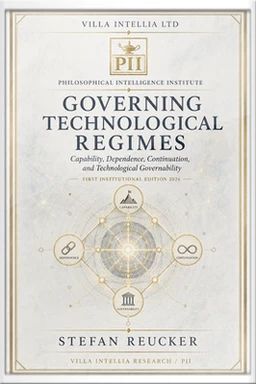
Governing Technological Regimes
Monograph | Technology Governance & Institutional Capability
Technological capability is not technological governability.
Examines how technologies become embedded in institutions, create capability and dependency, change over time, and remain—or cease to remain—governable.
NZD $29.50
The Politics of AI Safety
Extended Essay | Technology & Governance
Risk, legitimacy, and institutional control.
Examines AI safety as a governance problem shaped by risk framing, institutional incentives, and legitimacy dynamics.
NZD $8.50
POLITICAL ORDER & GEOPOLITICAL SYSTEMS
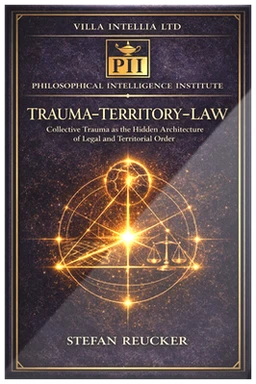
Trauma–Territory–Law (TTL)
Monograph | Political Order Theory
Trauma as the hidden architecture of state formation.
A structural model linking collective trauma, territorial fixation, and legal systems across generations.
NZD $18.50
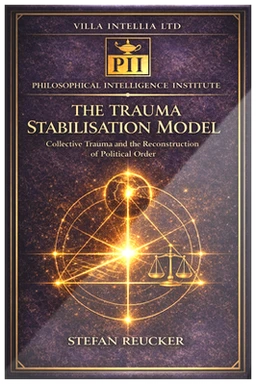
Trauma Stabilisation Model (TSM)
Monograph | System Recovery
From rupture to political order.
Explains how societies transform collective trauma into institutional stability and enduring governance structures.
NZD $18.50
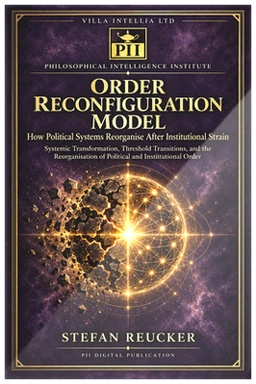
Order Reconfiguration Model (ORM)
Monograph | System Transformation
How political orders collapse and reorganise.
A framework explaining breakdown, transition, and stabilisation of power structures.
NZD $18.50
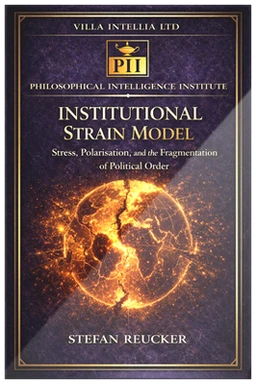
Institutional Strain Model (ISM)
Reader Edition | Institutional Dynamics
Examines how institutions absorb sustained pressure, consume reserve capacity, rely on compensation, deform under strain, transfer burdens, normalise dysfunction and approach structural limits while continuing to function.
NZD $9.50
MEANING, LEGITIMACY & CONFLICT
The Model of Meaning (MoMean)
Monograph | Meaning Systems
A structural ontology of meaning.
Explains how meaning is formed, constrained, damaged, and repaired across systems.
NZD $24.50
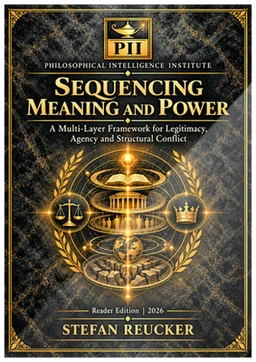
Sequencing Meaning and Power
Monograph | Political Theory & Conflict Analysis
Sequence conditions legitimate action.
A multi-layer framework for analysing legitimacy, agency, authority, and structural conflict.
NZD $29.50
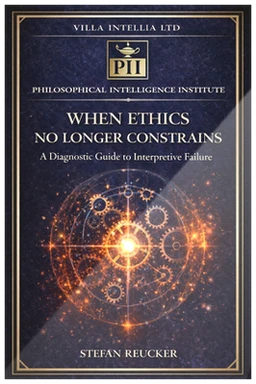
When Ethics No Longer Constrains
Monograph | Diagnostic Guide | Interpretive Failure
A diagnostic of post-ethical systems.
Explains why interpretation persists after its governing capacity collapses—and why more ethics is not the solution.
NZD $24.50
LITERARY INTELLIGENCE
Literary Intelligence: How Stories Become Instruments of Thought
Book | Interpretation, Narrative & Intelligence
Stories as disciplined instruments of thought.
Develops a reader-facing method for using literary and narrative worlds to generate analytical distinctions, externally testable questions, and more corrigible forms of intelligence—without treating fiction as empirical evidence.
NZD $24.50
Literary Intelligence and David Deutsch
Monograph | Literary Intelligence Case Study
Focus: Knowledge
Focus: Knowledge
Knowledge creation and correction conversion are different achievements.
Applies the Literary Intelligence method to David Deutsch’s The Beginning of Infinity, examining how explanation and knowledge become—or fail to become—authority, capability, action, consequence, and correction.
NZD $12.50
Literary Intelligence and Bret Easton Ellis
Monograph | Literary Intelligence Case Study
Focus: Recognition
Focus: Recognition
Recognition is not correction.
A bounded cross-corpus study of recognition, mediation, representation, agency, routing, and corrigibility across the works of Bret Easton Ellis.
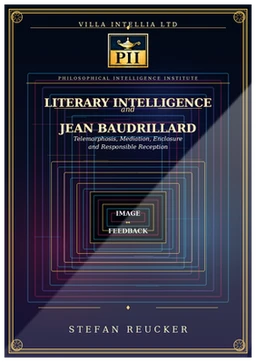
Literary Intelligence and Jean Baudrillard
Monograph | Literary Intelligence Case Study
Focus: Mediation
Focus: Mediation
Telemorphosis, Mediation, Enclosure and Responsible Reception.
A Literary Intelligence case study using Jean Baudrillard’s Telemorphosis as a Third Object to examine mediation, recursive communication, responsible reception, communicative enclosure and the conditions under which communication remains capable of correction.
Literary Intelligence and Guenter Grass
Monograph | Literary Intelligence Case Study
Focus: Correction
Focus: Correction
The Rat and the Architecture of Correction.
A Literary Intelligence case study using Günter Grass’s The Rat as a Third Object to examine the architecture linking warning, interpretation, responsibility, intervention, evidence, recurrence, and established correction.
NZD $12.50
Literary Intelligence and Gore Vidal
Monograph | Literary Intelligence Case Study
Focus: Power
History, Power, Republic and the Architecture of American Political Myth.
A Literary Intelligence case study examining how Gore Vidal’s historical fiction, essays and political memory represent the relationship between formal institutions, operating political order, access, authority, representation, historical closure, legitimacy and political myth.
The study develops concepts including Declared Order, Operating Order, Order Divergence, Access Architecture, Pre-Decisional Architecture, Authority Convertibility, Representational Capability, Legitimacy Conversion, Functional Transformation and the Regime Identity Problem.
NZD $12.50
Literary Intelligence and Haruki Murakami
Monograph | Literary Intelligence Case Study
Focus: Legibility
Reality, identity, memory and the problem of acting within worlds that remain only partially legible.
Across eight novels by Haruki Murakami, this study examines thresholds, disappearing persons, divided identity, unstable memory, causal opacity, interpretive suspension and return without restoration.
Developing the PII concept of Partial Legibility, the publication asks how interpretation and responsible agency remain possible when consequential reality cannot be fully known or explained.
NZD $12.50
Literary Intelligence and Thomas Mann
Monograph | Literary Intelligence Case Study
Focus: Identity
Felix Krull, Identity, Recognition and the Problem of the Real.
A PII Literary Intelligence study of Thomas Mann’s Confessions of Felix Krull, Confidence Man, examining the movement from performed identity to recognized and operational identity, and the distinction between social reality and biographical provenance.
NZD $12.50
Literary Intelligence and Anne Carlisle
Monograph | Literary Intelligence Case Study
Focus: Capture
Liquid Sky, Visibility, Extraction and the Architecture of Capture.
A Literary Intelligence case study of Anne Carlisle’s Liquid Sky: The Novel, examining visibility, recognition, coercion, classification, extraction and the point at which being seen becomes a mechanism of capture.
NZD $12.50
Literary Intelligence and Oswald Spengler
Monograph | Literary Intelligence Case Study
Monograph | Literary Intelligence Case Study
Focus: Mathematics
Mathematics and Intellectual Possibilities
Explores Spengler's understanding of mathematical worlds, cultural development and intellectual exhaustion, alongside Husserl, Heidegger, Russell and Whitehead. Introduces PII analytical methods for distinguishing genuine intellectual limits from assumptions that may be reconsidered or transformed.
NZD $12.50
MYSTICAL COGNITION
Model of Mysticism — Structural Framework
Monograph | Consciousness Architecture
A unified structure of mystical cognition.
Maps mystical transformation as a disciplined, sequential process across traditions.
NZD $21.50
Model of Mysticism — Comparative Framework
Monograph | Cross-Tradition Analysis
Mysticism across systems and disciplines.
A comparative analytical framework spanning philosophical and contemplative traditions.
NZD $21.50
APPLIED FRAMEWORKS & PRACTITIONER GUIDES
Watch the PII Explainer Video: From Framework To Practice
PHILOSOPHICAL INTERPRETIVE ENGINE
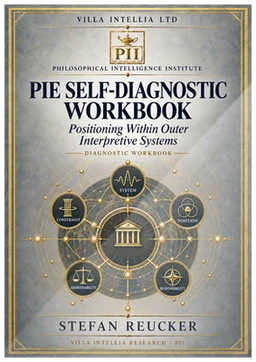
PIE Self-Diagnostic Workbook
Workbook | Diagnostic Tool
Position yourself within outer interpretive systems.
A structured diagnostic workbook for examining how institutions, platforms, professional roles, bureaucracies, and automated processes interpret, classify, and respond to you. Identify interpretive capacity, addressability, responsibility, and constraint before deciding whether to engage, pause, withdraw, seek external review, or refuse.
NZD $8.50
PIE Workbook
Workbook | Analytical Practice
Guided interpretive exercises.
Supports disciplined application of the Philosophical Interpretive Engine through structured analytical practice.
NZD $8.50
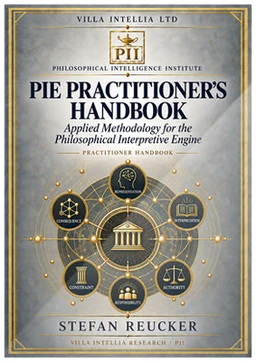
PIE Practitioner’s Handbook
Handbook | Applied Methodology
From interpretive architecture to disciplined practice.
A comprehensive practitioner reference for applying the Philosophical Interpretive Engine in live institutional, organisational, technological, and analytical settings.
NZD $12.50
MODEL OF MEANING
Model of Meaning — Analytical Workbook
Workbook | Meaning Analysis
Understand how meaning operates and fails.
A structured workbook for analysing meaning systems and breakdowns.
NZD $24.50
MEANING AND POWER
Sequencing Meaning and Power — Workbook
Analytical Workbook | Legitimacy, Agency & Structural Conflict
Diagnosis before admissibility. Admissibility before action.
A structured diagnostic workbook for examining meaning, legitimacy, identity, agency, power, tool admissibility, governance failure, and the conditions under which progression must stop.
NZD $19.50
MODEL OF MYSTICISM
Model of Mysticism — Self-Diagnostic Workbook
Workbook | Inner Orientation Diagnostics
Workbook | Inner Orientation Diagnostics
Mapping inner orientation without forced interpretation.
A non-scoring self-diagnostic workbook for recognising the present configuration of inner life without converting it into meaning, identity, or action.
Applied Model of Mysticism — Field Guide
Field Guide | Applied Interpretive Practice
Field Guide | Applied Interpretive Practice
A practical field guide for applying the Model of Mysticism.
Supports structured reflection on interpretive pressure, inner orientation, stabilisation, symbolic meaning, and the conditions under which further interpretation should proceed, pause, or stop.
NZD $8.50
Professional Briefings
PII publishes client-facing professional briefings for managers, consultants, governance professionals, policy people, and organisations facing applied interpretive problems. They are intended for readers who need to understand a problem clearly before committing resources, authority, communication, policy, reform, or governance action.
6. CEO Decision-Framing Briefing
7. Board Oversight Briefing
8. Reform Failure Briefing
9. Strategic Communication Briefing
10. Public Issues to Governable Decisions
7. Board Oversight Briefing
8. Reform Failure Briefing
9. Strategic Communication Briefing
10. Public Issues to Governable Decisions
1. Interpretive Resilience Briefing
2. Admissibility Briefing
3. Interpretive Governance Briefing
4. Stakeholder Interpretation Briefing
5. Client Readiness Briefing
2. Admissibility Briefing
3. Interpretive Governance Briefing
4. Stakeholder Interpretation Briefing
5. Client Readiness Briefing
PII Professional Briefings are concise, client-facing publications designed for managers, CEOs, boards, consultants, policy people, governance professionals, researchers, and organisations facing complex interpretive or institutional problems.
●
Applied PII Frameworks & Case Analysis
PII frameworks are not only theoretical constructs—they are designed for application under real-world conditions.
Selected case analyses demonstrate how interpretation, sequencing, and admissibility operate across governance, institutional, and technological environments.
Case 01 — Governance Failure as Sequencing Error
Structural breakdown arising from misordered intervention
Case 02 — Containment Governance Under Pressure
Managing instability under constrained design capacity
Disclaimer: PII publications are research and analytical outputs. They do not constitute professional accreditation, legal, engineering, financial, technical, or other professional advice, and publication does not imply external institutional endorsement or independent certification unless expressly stated.